Molecular evolution & comparative pathogenomics
Summary
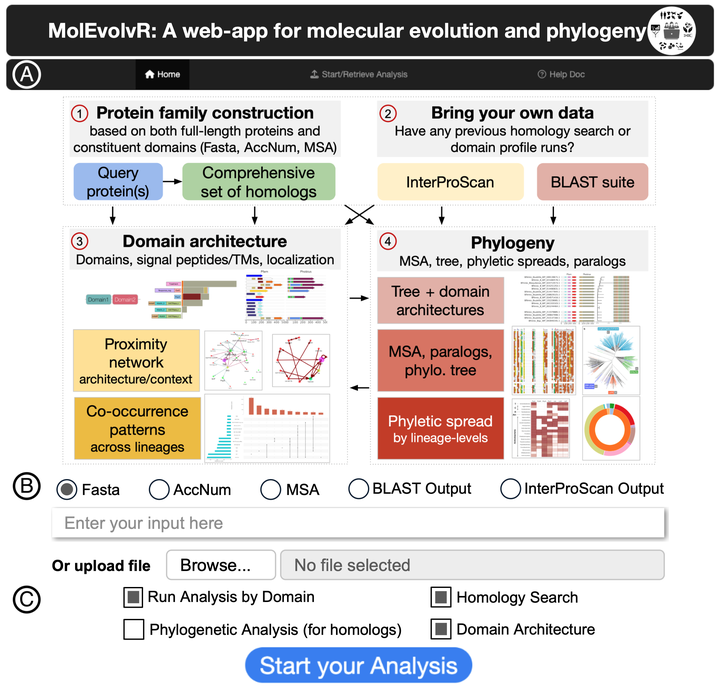
We developed MolEvolvR, a web application that integrates sequence analysis, domain architecture mapping, phylogenetic reconstruction, and genomic context visualization to enable systematic study of protein family evolution across the tree of life. MolEvolvR has engaged 45+ trainees worldwide through the Outreachy open-source program; we are developing MolEvolvR 2.0 with a companion R package for programmatic access.
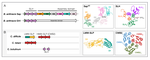
Our foundational work on the phage shock protein (PSP) envelope stress response exemplifies this approach: discovering that a minimal PSP system was present in the last universal common ancestor and tracing its diversification into novel functional contexts across life, including novel partners (Toastrack domain, HTH-associated signaling domain, ATPase and Band-7 domain associations). We have applied this evolutionary framework broadly to characterize protein families across diverse pathogens — including bacterial phage defense via deoxycytidine deaminases, cell surface S-layer proteins in Gram-positive pathogens, internalins in Listeria, DciA helicase loaders across bacterial phyla, and sulfur acquisition systems in Staphylococcus aureus. This work is foundational to our group’s philosophy of using evolutionary genomics to predict protein function with both basic biology and translational impact.

Janani Ravi
Assistant Professor
My research interests include computational pathogenomics and host-directed drug-repurposing.
Publications
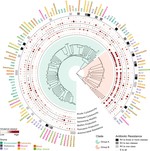
Genomic comparison and phenotypic characterization of Pseudomonas aeruginosa isolates across environmental and diverse clinical isolation sites
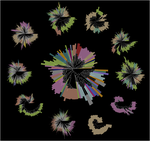
Genotype-phenotype modeling of light ecotypes in Prochlorococcus reveals genomic signatures of ecotypic divergence

The phage shock protein (PSP) envelope stress response: discovery of novel partners and evolutionary history
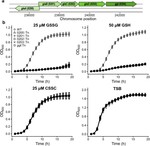
The glutathione import system satisfies the Staphylococcus aureus nutrient sulfur requirement and promotes interspecies competition
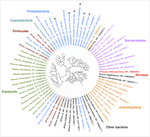
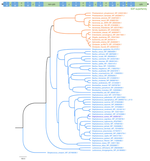
DciA Helicase Operators Exhibit Diversity across Bacterial Phyla
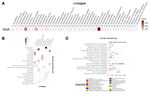
Novel Internalin P homologs in Listeria ivanovii londoniensis and Listeria seeligeri
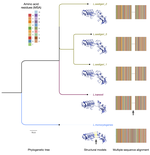
MolEvolvR: a web-app for characterizing proteins using molecular evolution and phylogeny
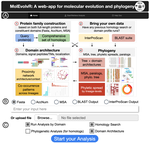
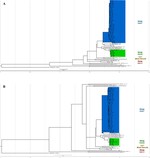
Discovery of a predominant and distinct lineage of Mycobacterium tuberculosis in Brazilian indigenous population
Talks
MolEvolvR BTS: When and how to build a web-app and software package?
We recently developed a web application, MolEvolvR, to characterize proteins using molecular evolution and phylogeny. This session will …



MolEvolvR: A webapp for characterizing proteins using molecular evolution and phylogeny

MolEvolvR: Web-app and R-package for characterizing proteins using molecular evolution and phylogeny

Using a computational molecular evolution and phylogeny to study pathogenic proteins

MolEvolvR: a web-app for molecular evolution and phylogeny
We will discuss the alpha version of their new easy-to-use interactive webapp: MolEvolvR, for characterizing proteins using molecular …